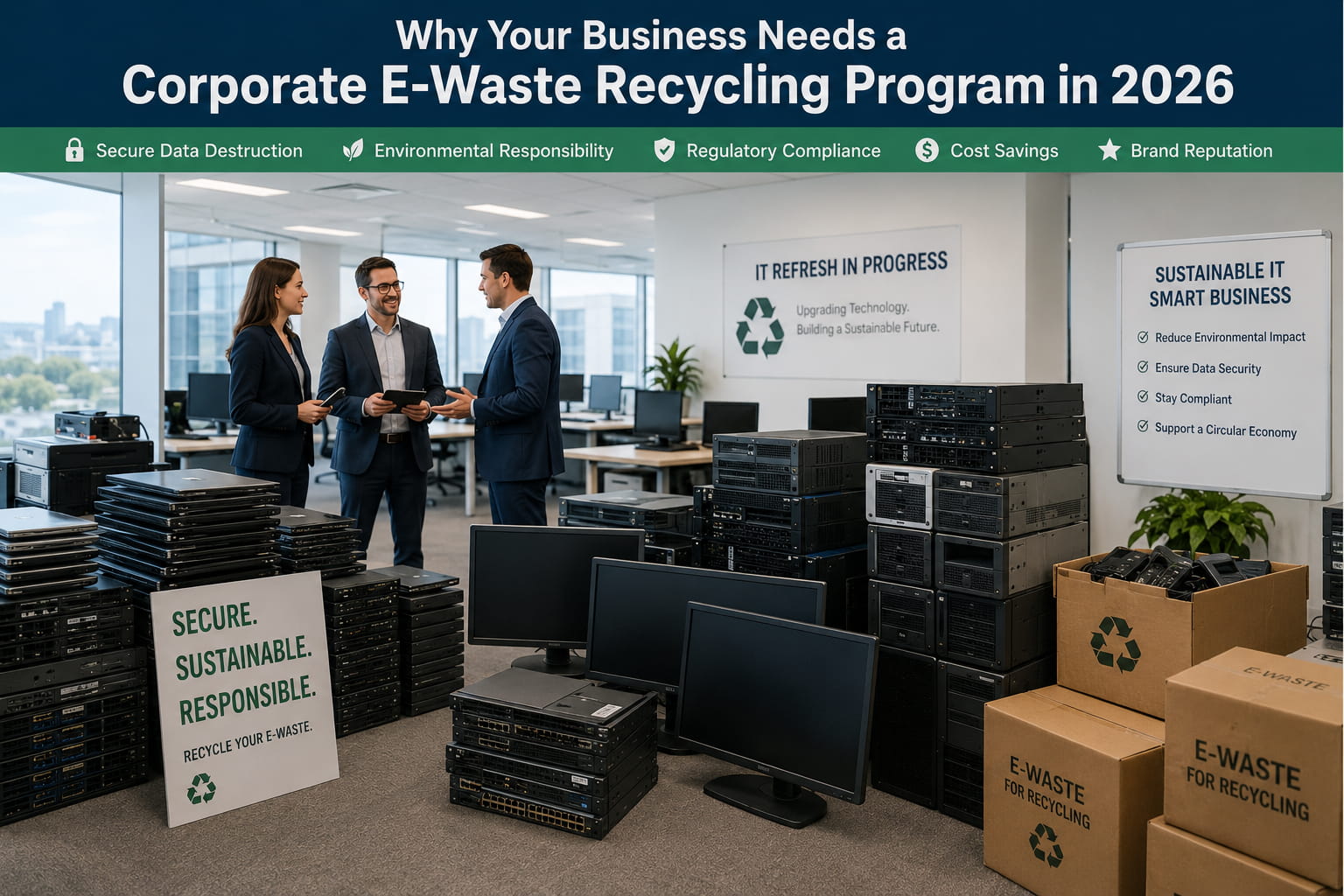
The Growing Challenge of Electronic Waste for Businesses
Technology upgrades are happening faster than ever. Businesses regularly replace laptops, desktops, servers, networking equipment, mobile devices, and other IT assets to stay competitive. While these upgrades improve productivity, they also create a growing challenge: managing outdated electronics responsibly.
In 2026, having a structured business electronic recycling program is no longer just an environmental initiative it is a business necessity. Companies that fail to properly manage retired IT equipment face risks ranging from data breaches and compliance violations to environmental liabilities and reputational damage.
A well-planned business electronic recycling strategy helps organizations protect sensitive information, meet sustainability goals, and ensure outdated technology is handled securely and responsibly.
What Is a Corporate E-Waste Recycling Program?
A corporate e-waste recycling program is a formal process that enables businesses to collect, track, recycle, and dispose of outdated electronic equipment in a secure and environmentally responsible manner.
A successful program typically includes:
- Asset inventory and tracking
- Secure collection and transportation
- Certified electronic waste disposal
- Data sanitization and destruction
- Responsible recycling and material recovery
- Compliance documentation
Rather than treating old electronics as trash, businesses can use electronic waste recycling services to safely manage retired devices while reducing risk and supporting sustainability initiatives.
Why Businesses Need E-Waste Recycling in 2026
1. Protect Sensitive Business Data
Every retired device may contain confidential information, including customer records, employee data, financial documents, and proprietary business information.
Without proper e waste management, businesses risk exposing sensitive information through improperly discarded equipment.
This is why leading organizations integrate secure data destruction into their business electronic recycling programs. Before devices are recycled or remarketed, data must be permanently erased or destroyed to prevent unauthorized access.
2. Meet Environmental and Regulatory Requirements
Governments and regulatory agencies continue to strengthen requirements related to electronic waste handling.
Improper electronic waste disposal can expose organizations to environmental penalties and compliance issues. Many businesses are also under increasing pressure from customers, investors, and stakeholders to demonstrate sustainable practices.
Implementing a structured e waste recycling program helps businesses meet environmental responsibilities while maintaining compliance with industry regulations.
3. Support Corporate Sustainability Goals
Sustainability has become a key priority for organizations across industries.
A strong business electronic recycling initiative supports Environmental, Social, and Governance (ESG) objectives by ensuring electronic devices are processed responsibly rather than ending up in landfills.
Through professional electronic waste recycling services, valuable materials such as copper, aluminum, steel, and precious metals can be recovered and reused, reducing environmental impact and conserving natural resources.
The Risks of Not Having an E-Waste Recycling Program
Many organizations still rely on ad-hoc disposal methods when retiring equipment. This approach creates significant risks.
Data Security Risks
Old devices often contain recoverable information. Without proper e waste management and data destruction procedures, businesses can become vulnerable to costly data breaches.
Compliance Risks
Failure to document electronic waste disposal activities can create challenges during audits and regulatory reviews.
Reputational Risks
Customers increasingly expect businesses to demonstrate environmental responsibility. Poor disposal practices can damage brand reputation and customer trust.
Operational Inefficiencies
Without a formal e waste recycling process, retired equipment often accumulates in storage rooms, warehouses, and offices, creating unnecessary clutter and security concerns.
What to Look for in Electronic Waste Recycling Services
Not all providers offer the same level of security and accountability.
When evaluating electronic waste recycling services, businesses should look for:
Certified Data Security
A provider should include secure data destruction processes for all data-bearing devices.
Compliance Documentation
Organizations should receive detailed records, tracking information, and certificates confirming proper handling.
Responsible Recycling Practices
Choose providers committed to sustainable recycling and environmentally responsible processing.
Experience with Business Needs
Experienced providers understand the unique challenges associated with business electronic recycling, including large-scale IT refreshes, data center upgrades, and multi-location asset collections.
The Role of E-Waste Companies in Business Success
Professional e-waste companies help organizations simplify complex disposal challenges.
These providers offer end-to-end solutions, including collection, transportation, destruction, recycling, and reporting. Working with trusted e-waste companies allows businesses to focus on operations while ensuring retired electronics are handled securely and responsibly.
In addition, many organizations are adopting broader technology waste management strategies that address the entire lifecycle of IT assets from procurement to final disposal.
Why 2026 Is the Right Time to Act
The volume of retired technology continues to grow every year. Businesses that delay implementing a formal e-waste management strategy may face increasing risks related to security, compliance, and sustainability.
By investing in a structured business electronic recycling program now, organizations can:
- Improve data security
- Support sustainability initiatives
- Reduce environmental impact
- Maintain regulatory compliance
- Streamline IT asset retirement processes
Conclusion
A corporate business electronic recycling program is no longer optional in 2026. It is a critical component of modern risk management, sustainability planning, and IT governance.
Through professional electronic waste recycling services, secure electronic waste disposal, and effective e waste recycling practices, businesses can protect sensitive information, strengthen compliance, and demonstrate environmental responsibility.
Partnering with experienced providers ensures your organization has the right processes, documentation, and support needed to manage retired technology safely and efficiently.
If your business is planning an IT refresh, office relocation, or technology upgrade, now is the time to implement a comprehensive e-waste recycling program that protects both your data and your reputation.
Protect your business data, support sustainability goals, and ensure compliant electronic waste disposal with eRevival’s certified recycling services.
Contact us today to schedule a consultation and develop a customized e-waste recycling solution for your organization.
Frequently Asked Questions (FAQ’s)
1. What is a corporate e-waste recycling program?
A corporate e-waste recycling program is a structured process that helps businesses securely collect, manage, recycle, and dispose of outdated electronic equipment while protecting sensitive data and supporting environmental compliance.
2. Why is business electronic recycling important for companies?
Business electronic recycling helps organizations reduce environmental impact, protect sensitive information, comply with regulations, and responsibly manage retired IT assets such as laptops, servers, hard drives, and networking equipment.
3. How does e-waste recycling help protect business data?
Professional e-waste recycling providers typically include secure data destruction services that permanently erase or destroy data stored on retired devices, helping businesses prevent data breaches and unauthorized access.
4. What types of equipment can be included in an e-waste recycling program?
A corporate e-waste recycling program can include laptops, desktops, servers, hard drives, SSDs, monitors, printers, networking equipment, mobile devices, and other electronic assets used in business operations.
5. How do electronic waste recycling services support sustainability goals?
Electronic waste recycling services help recover valuable materials, reduce landfill waste, lower environmental impact, and support corporate sustainability and ESG initiatives through responsible recycling practices.
- How often should businesses recycle outdated IT equipment?
Businesses should review and recycle outdated IT equipment during major technology upgrades, office relocations, device refresh cycles, or at least annually to maintain security, compliance, and efficient asset management.


Leave a comment