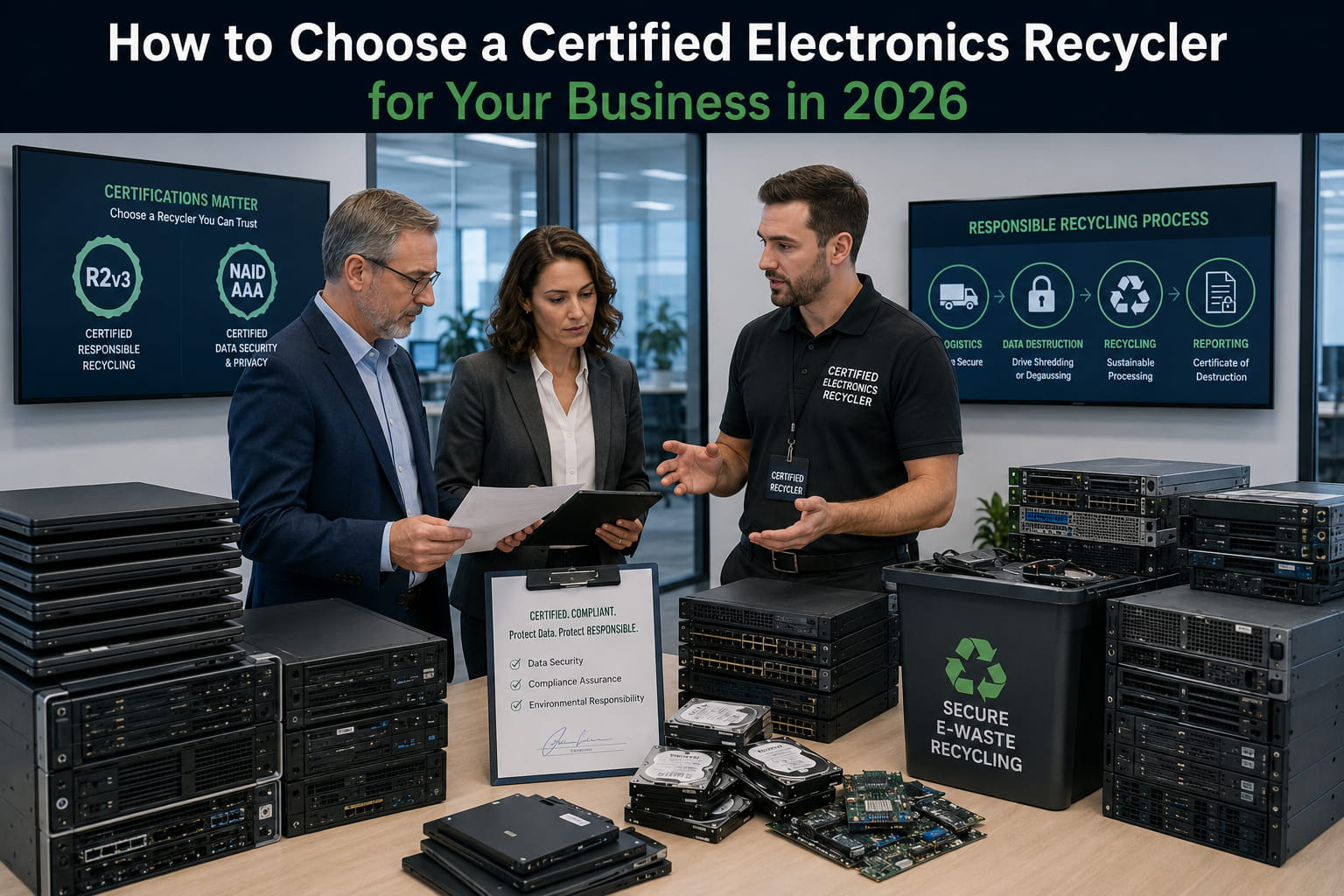
Businesses are replacing IT equipment faster than ever. From laptops and servers to networking devices and storage media, technology upgrades are essential to remain competitive. But what happens to outdated electronics once they’re retired?
Choosing a certified electronics recycler is one of the most important decisions your business can make. The wrong recycling partner can expose your organization to data breaches, compliance violations, and environmental risks. The right partner helps protect sensitive information, ensures regulatory compliance, and supports your sustainability goals.
As more organizations prioritize responsible IT disposal in 2026, understanding what separates qualified certified electronics recyclers from ordinary recycling providers is essential.
Why Certification Matters
Not every electronics recycler follows the same standards. While many companies claim to recycle responsibly, onlycertified recyclers can demonstrate compliance with recognized industry standards and secure processing procedures.
Businesses handling customer information, financial records, employee data, or intellectual property should work with recycling providers that follow strict operational controls and documented security practices.
Choosing a certified electronics recycler helps reduce risk while ensuring retired equipment is processed securely and responsibly.
Look for R2v3 Certification
One of the most important qualifications to evaluate is R2v3 certification.
R2v3 certification is an internationally recognized standard that establishes best practices for electronics reuse, recycling, data security, environmental protection, and worker safety. It ensures that electronics are processed responsibly throughout their lifecycle.
When comparing recycling providers, ask whether they maintain current R2v3 certification and whether independent audits verify their compliance.
Businesses working with anR2-certified recycler gain greater confidence that their retired equipment is handled according to industry best practices.
Verify NAID AAA Certification for Data Security
If your retired devices contain confidential information, NAID AAA certification should be another requirement.
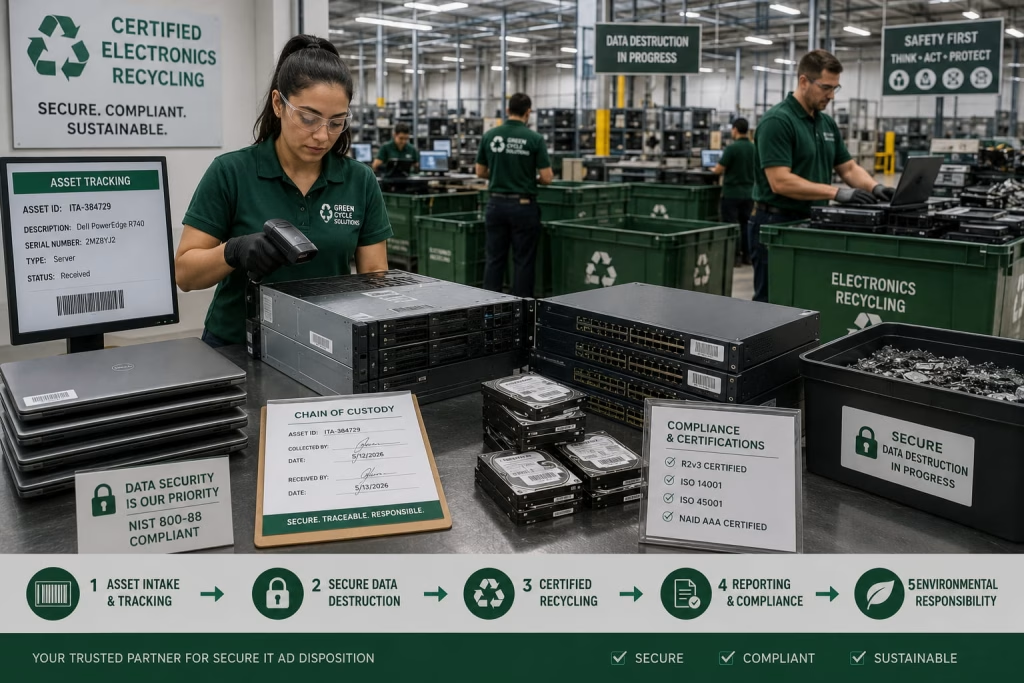
NAID AAA certification verifies that a service provider follows strict standards for secure destruction of data-bearing devices. Regular audits ensure that destruction processes, employee screening, security controls, and operational procedures meet rigorous requirements.
Healthcare organizations, financial institutions, government agencies, legal firms, and educational institutions frequently require vendors with NAID AAA certification because of their compliance obligations.
Selecting a provider with both NAID AAA certification and R2v3 certification delivers stronger protection for sensitive business information.
Evaluate IT Asset Disposition Companies Carefully
Not all IT asset disposition companies provide the same level of service.
Some only collect electronics, while others provide complete lifecycle management, including secure transportation, data destruction, remarketing, reporting, and certified recycling.
When comparing IT asset disposition companies, ask questions such as:
- Are assets tracked throughout the process?
- Is a documented chain of custody maintained?
- Are Certificates of Destruction provided?
- Are certified recycling processes followed?
- Do they maintain recognized industry certifications?
Choosing experiencedIT asset disposition companies helps reduce operational risk and improves compliance with internal and external requirements.
Why Electronics Recycling Certification Is Important
Businesses should never assume a recycler follows responsible practices without proof.
An electronics recycling certification demonstrates that the recycler follows documented environmental, operational, and security standards. It also provides confidence that retired electronics will not be improperly exported or disposed of in landfills.
Working with a provider that holds an electronics recycling certification helps organizations meet sustainability initiatives while protecting their brand reputation.
Before signing any agreement, request documentation confirming the company’s electronics recycling certification and audit status.
Consider More Than Recycling
A quality recycling partner should offer more than equipment collection.
Many businesses also require IT asset recovery services that maximize the remaining value of retired technology through refurbishment and resale when appropriate.
In addition, organizations should look for providers offering secure asset & hard drive recycling to ensure storage devices are permanently destroyed before recycling begins.
These services reduce costs while strengthening data security and supporting environmental responsibility.
Questions to Ask Before Choosing a Recycling Partner
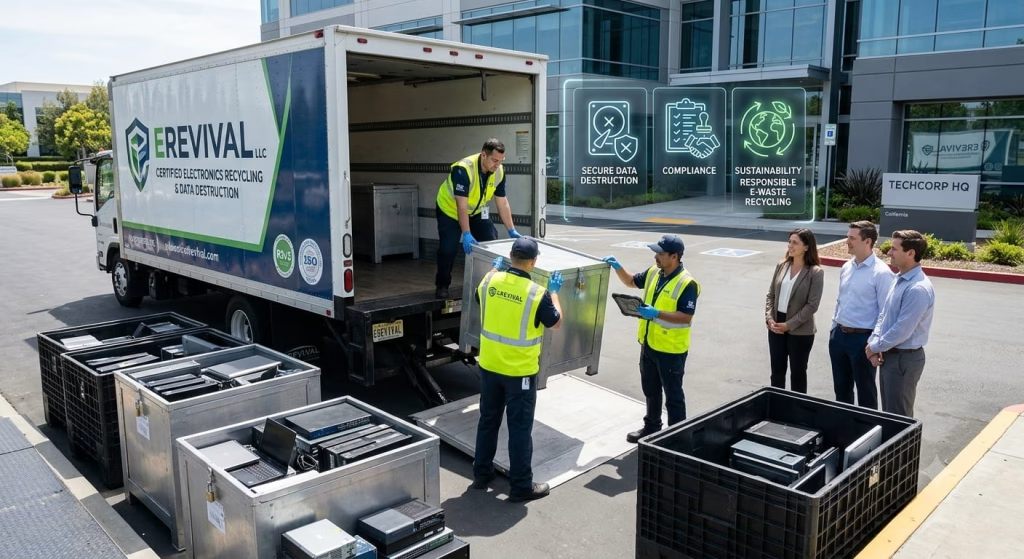
Before selecting a certified recycler, ask:
- Are you certified under R2v3 and NAID AAA standards?
- How do you protect sensitive business data?
- What documentation will I receive?
- Do you provide Certificates of Destruction?
- Can you support multi-location businesses?
- What industries do you serve?
These questions help identify certified recyclers that understand enterprise security, compliance, and sustainability requirements.
Why Businesses Across the Northeast Trust Certified Recycling Partners
Organizations across New Jersey, New York, Connecticut, Maryland, Virginia, Washington D.C., Georgia, and Massachusetts are strengthening their IT asset management strategies by working with certified recycling providers.
Whether you’re replacing office computers, decommissioning servers, or managing a large-scale technology refresh, partnering with a certified electronics recycler helps protect your business from unnecessary risks while supporting regulatory compliance and environmental responsibility.
Conclusion
Choosing the right certified electronics recycler is about much more than disposing of old electronics. It is about protecting sensitive business data, meeting compliance obligations, supporting sustainability initiatives, and ensuring your retired IT assets are managed responsibly.
Businesses should evaluate providers based on R2v3 certification, NAID AAA certification, recognized electronics recycling certification, and the experience of established IT asset disposition companies. These qualifications demonstrate a commitment to secure, compliant, and environmentally responsible recycling practices.
If your organization is planning an IT refresh, office relocation, or technology upgrade in 2026, partner with a certified electronics recycler that provides secure asset management, complete documentation, and trusted recycling solutions.
Ready to work with a certified electronics recycler?
Protect your business data, maintain compliance, and recycle your retired IT assets responsibly with eRevival’s certified electronics recycling solutions.
👉Contact eRevival today to schedule a consultation and discover how our secure IT asset disposition and certified recycling services can support your business.
Frequently Asked Questions (FAQ’s)
1. What is a certified electronics recycler?
A certified electronics recycler is a company that meets recognized industry standards for securely recycling electronic devices while protecting sensitive data and the environment. Certifications such as R2v3 and NAID AAA demonstrate that the recycler follows strict processes for data security, environmental compliance, and responsible electronics recycling.
2. Why should businesses choose a certified electronics recycler?
Businesses should choose a certified electronics recycler to protect confidential data, comply with environmental regulations, reduce the risk of data breaches, and ensure retired IT equipment is recycled responsibly. Certified recyclers also provide documentation, asset tracking, and Certificates of Destruction to support compliance and audits.
3. What certifications should an ITAD vendor have?
When evaluating an ITAD vendor, look for R2v3 Certification for responsible electronics recycling and NAID AAA Certification for secure data destruction. These certifications demonstrate that the provider follows internationally recognized standards for environmental responsibility, data security, and operational excellence.
4. What is the difference between R2v3 and NAID AAA certification?
R2v3 Certification focuses on responsible electronics recycling, IT asset management, environmental protection, and data security throughout the recycling process. NAID AAA Certification specifically verifies secure data destruction practices, employee screening, operational security, and compliance with data protection standards.
5. How do certified electronics recyclers protect business data?
Certified electronics recyclers protect business data by using secure data destruction methods such as data wiping, hard drive shredding, media degaussing, and documented chain-of-custody procedures. They also provide Certificates of Destruction to verify that sensitive information has been permanently destroyed.
6. How do I choose the right certified electronics recycler?
Choose a certified electronics recycler that holds R2v3 and NAID AAA certifications, offers secure data destruction, maintains a documented chain of custody, provides Certificates of Destruction, and has experience serving businesses in regulated industries such as healthcare, finance, government, and education.

Leave a comment