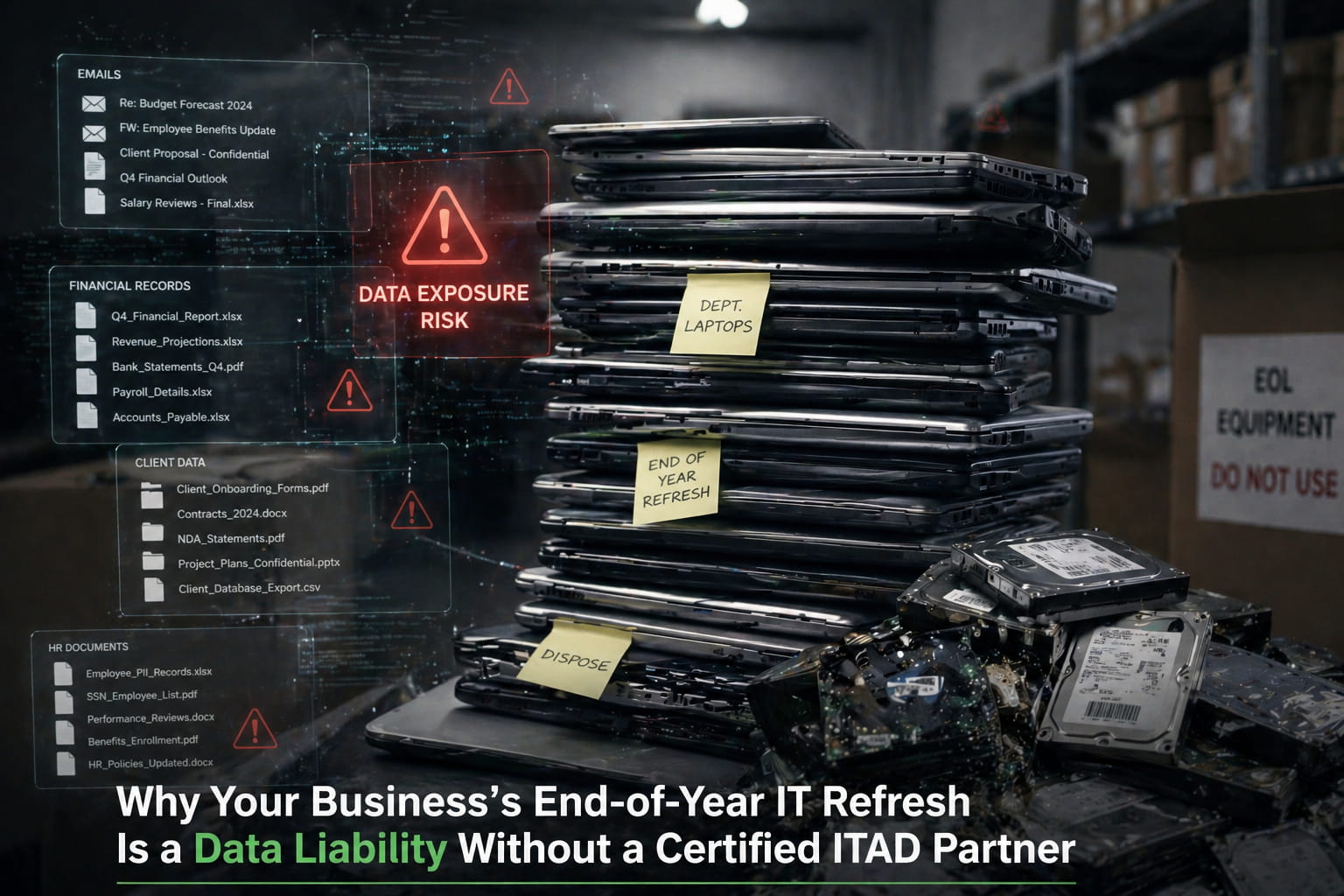
Why Your Business’s End-of-Year IT Refresh Is a Data Liability Without a Certified ITAD Partner
Introduction: The Hidden Risk Behind IT Refresh Cycles
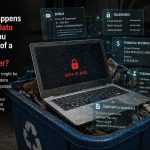
Every quarter, thousands of businesses across the U.S. upgrade their IT infrastructure, swapping out laptops, servers, hard drives, and networking equipment. But while IT teams focus on deploying new devices, there’s a far more dangerous question left unanswered: What happens to the data on the devices going out?Without a structured approach to IT asset disposition, old devices often leave your organization with sensitive data still intact.
These devices may contain customer information, financial records, internal communications, and proprietary business data. If not handled correctly, they can become a major liability. And retired servers get donated without proper data wiping. Each of these scenarios is a compliance violation and a potential breach waiting to happen.
This is why businesses today are turning to professionalIT asset disposal services that include certified data destruction and secure handling processes that are no longer optional for B2B organizations. Because when it comes to retiring IT assets, simply removing equipment is not enough, it must be done securely, compliantly, and with full accountability.
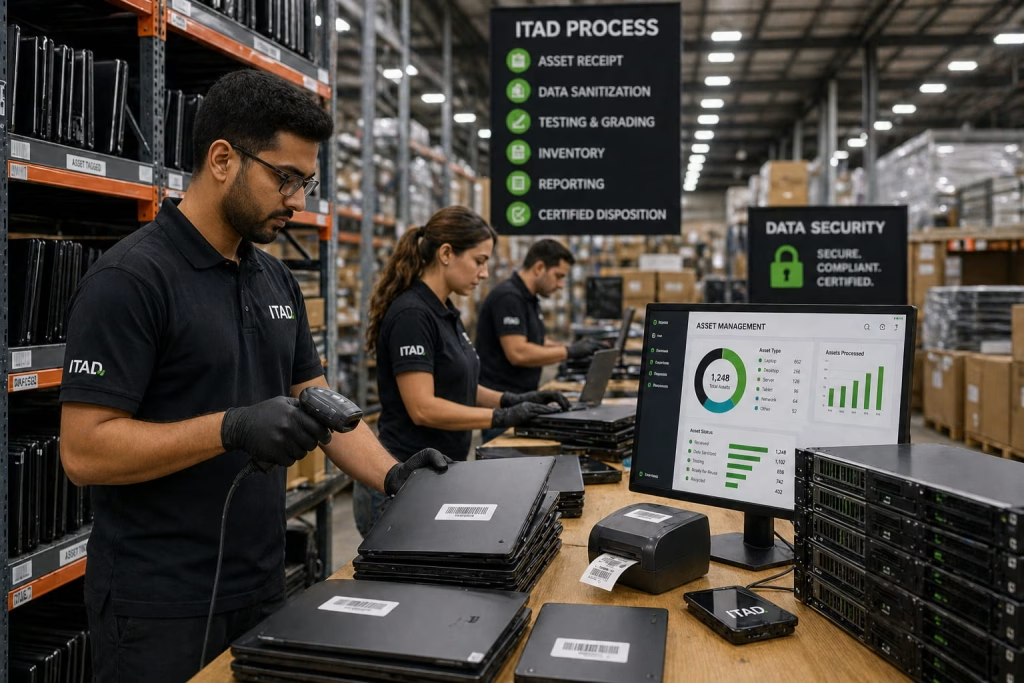
What Is IT Asset Disposition and Why It Matters for Business Security
IT asset disposition is the process of securely retiring outdated or unused IT equipment in a way that protects data, ensures compliance, and supports environmental responsibility.
This process goes far beyond basic IT equipment disposal. It includes:
- Asset tracking and inventory management
- Secure data destruction
- Responsible recycling or resale
- Documentation for compliance audits
Businesses that rely on proper it asset disposition gain complete control over how their devices are handled, even after they leave the workplace. Without it, organizations are left vulnerable to data leaks and regulatory issues.
Why End-of-Year IT Refresh Creates Hidden Data Risks
End-of-year IT refresh cycles often prioritize speed and cost efficiency. Budgets must be utilized, systems upgraded, and equipment replaced quickly. But in this rush, security is frequently overlooked.
Many businesses treat the disposal of IT equipment as a routine operational task instead of a critical security function. Devices are often:
- Stored temporarily without tracking
- Sent to uncertified recyclers
- Wiped using basic deletion methods
- Disposed of without documentation
This approach exposes businesses to unnecessary risk. Without proper it asset disposition, there is no guarantee that sensitive data has been permanently removed.
Even one improperly handled device can result in a data breach, makingsecure data destruction for businesses an essential requirement rather than an option.
The Real Cost of Improper IT Equipment Disposal
The consequences of poor it equipment disposal extend far beyond lost hardware.
Key risks include:
1. Data Breaches
Old storage devices often retain recoverable data. Without certified data destruction, this data can be accessed by unauthorized individuals.
2. Compliance Violations
Regulations such as HIPAA, FACTA, and PCI-DSS require businesses to securely dispose of data. Failure to follow proper it asset disposition practices can result in legal penalties.
3. Financial Loss
Data breaches can cost millions in fines, legal fees, and lost business opportunities.
4. Environmental Impact
Improper handling of electronic waste contributes to environmental damage. This is why secure e waste destruction is a key component of responsible IT asset management.

Why Certified Data Destruction Is Non-Negotiable
One of the most common misconceptions is that deleting files or formatting a device removes data permanently. In reality, this does not eliminate data, it only makes it less visible.
Certified data destruction uses approved methods to ensure data is permanently unrecoverable.
These methods include:
- Software-based wiping using NIST 800-88 standards
- Degaussing for magnetic media
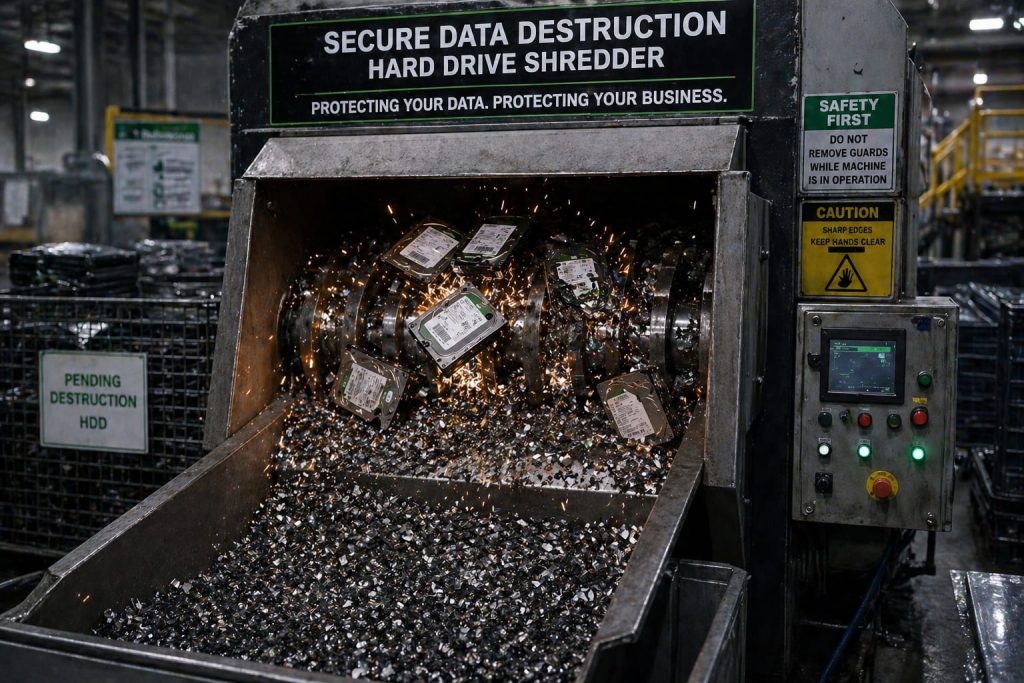
- Physical shredding of storage devices
Professional data destruction services provide documented proof that data has been securely destroyed. This includes certificates that are essential for compliance audits.
Without certified data destruction, businesses cannot prove that their data was handled securely, leaving them exposed to legal and operational risks.
How ITAD Companies Help Eliminate Risk
Partnering with experienced ITAD companies ensures that your IT refresh process is secure, structured, and compliant.
Here’s how they protect your business:
1. End-to-End Asset Tracking
Every device is monitored throughout the it asset disposition process, ensuring accountability at every stage.
2. Certified Data Destruction
All devices undergo certified data destruction, eliminating any possibility of data recovery.
3. Compliance Documentation
Detailed records and certificates are provided, ensuring your business is audit-ready.
4. Value Recovery
Devices that are still functional can be refurbished or resold, maximizing return on investment.
5. Secure E-Waste Destruction
Non-reusable devices are processed throughsecure e waste destruction, ensuring environmentally responsible disposal.
By using professional it asset disposal services, businesses can transform a risky process into a secure and efficient operation.
What Happens Without a Certified ITAD Partner
When businesses attempt to manage it equipment disposal internally or rely on uncertified vendors, they lose control over their data.
Common outcomes include:
- Devices leaving the premises with intact data
- No proof of destruction during audits
- Increased exposure to data theft
- Non-compliance with regulations
Even internal IT teams often lack the tools and certifications required for secure data destruction for businesses. This makes professional it asset disposition essential for any organization handling sensitive data.
Best Practices for Secure IT Asset Disposition
To ensure your IT refresh process is secure and compliant, follow these best practices:
✔ Choose Certified ITAD Providers
Work with vendors offering it asset disposal services that include certification and compliance standards.
✔ Prioritize Certified Data Destruction
Every device must undergo certified data destruction before disposal or resale.
✔ Maintain Documentation
Track all assets and maintain records of destruction to support audits.
✔ Plan Proactively
Don’t wait until year-end. Implement regular it asset disposition cycles.
✔ Ensure Secure E-Waste Handling
Use providers that offer secure e waste destruction to protect the environment and your brand reputation.
IT Asset Disposition vs Basic IT Equipment Disposal: What’s the Difference?
Many businesses assume that IT equipment disposal and IT asset disposition are the same but they are not.
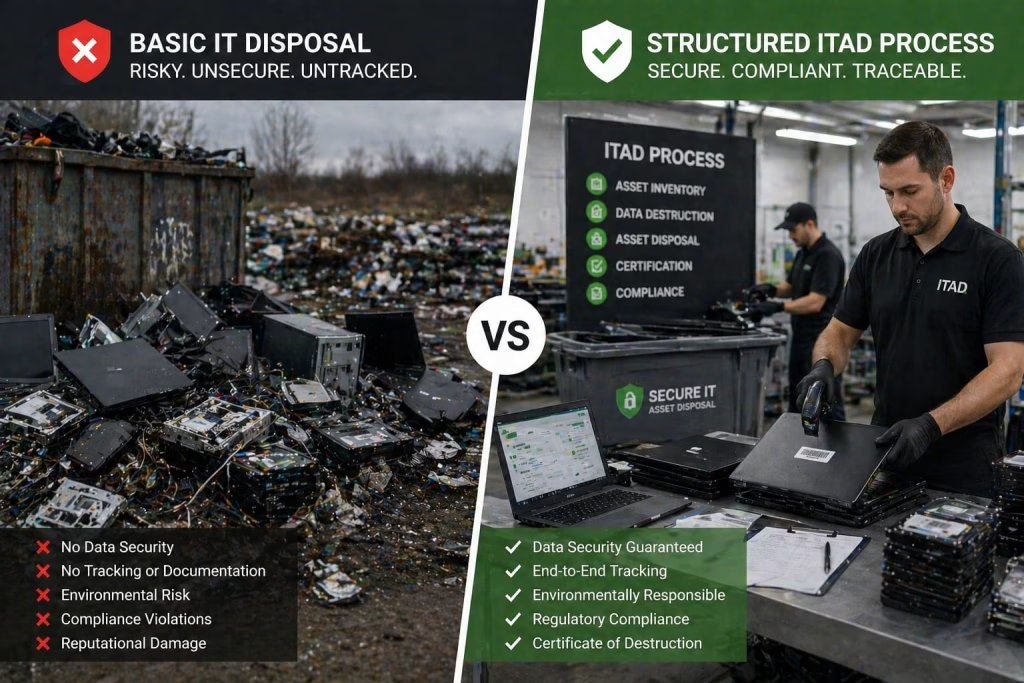
Basic IT equipment disposal focuses only on removing devices from your premises. It does not guarantee secure data destruction, compliance documentation, or asset tracking.
In contrast, IT asset disposition is a structured process that includes certified data destruction, chain-of-custody tracking, audit-ready documentation, and secure e waste destruction.
If your business handles sensitive or regulated data, relying on simple disposal of IT equipment is not enough. Only a certified IT asset disposition process ensures your data is fully protected and compliant with industry regulations.
Why IT Asset Disposition Is a Strategic Business Function
Many businesses treat the disposal of IT equipment as a logistical task. However, in today’s digital environment, it is a critical part of risk management.
Effective IT asset disposition:
- Protects sensitive business data
- Ensures regulatory compliance
- Reduces legal and financial risks
- Supports sustainability initiatives
By integrating it asset disposition into your overall IT strategy, you strengthen both security and operational efficiency.
eRevival Serves B2B Clients Across the Northeast and Mid-Atlantic
If your organization is based in New Jersey, New York, Connecticut, Maryland, Virginia, Washington D.C., Georgia, or Massachusetts, eRevival provides convenient bulk pickup of retired IT equipment directly from your facility. Our data destruction services and secure electronics recycling are designed for the volume and compliance demands of enterprise and mid-market B2B clients.
We handle everything: laptops, servers, networking gear, hard drives, mobile devices, cables, and more. Our disposal of it equipment service includes a complete asset report, Certificate of Recycling, and Certificate of Data Deletion, all included as standard with every B2B pickup.
Ready to Secure Your IT Asset Disposition Process?
Don’t leave your data exposed during your next IT refresh. Partner with a certified provider that delivers secure data destruction, full compliance documentation, and end-to-end asset tracking.
Request asecure IT asset disposition quote today and ensure every device is handled safely, compliantly, and with zero data risk.
FAQs (Frequently Asked Questions)
1. What is IT asset disposition (ITAD)?
IT asset disposition is the process of securely retiring IT equipment through data destruction, recycling, and compliance documentation to protect business data.
2. Why is certified data destruction important?
Certified data destruction ensures that data is permanently erased and unrecoverable, protecting businesses from breaches and compliance violations.
3. Can I handle IT equipment disposal internally?
Basic it equipment disposal can be handled internally, but without professional tools and certification, it cannot guarantee secure data destruction or compliance.
4. What do ITAD companies do?
ITAD companies manage the entire lifecycle of retired IT assets, including tracking, secure data destruction for businesses, recycling, and documentation.
5. What industries need ITAD services most urgently?
Any organization handling regulated data requires formal IT asset disposition including healthcare (HIPAA), financial services (GLBA), government agencies (FISMA), education (FERPA), and retailers (PCI-DSS).
6. How often should businesses perform IT asset disposition?
Businesses should plan regular IT asset disposition cycles typically annually or during major IT upgrades to avoid data accumulation risks.

Leave a comment